Friday, March 30, 2012

IC-TBR Forum with Middle Eastern and Tampa Bay Women Political Leaders

During USFSP's International Week events, I was privileged to moderate a discussion about Women and Politics in the U.S. and the Middle East. 

The delegation of Middle Eastern women community, business, and government leaders (from Egypt, Iraq, Jordan, Morocco, the Palestinian Territories, Qatar, Saudi Arabia, and Tunisia) was hosted by the International Council of the Tampa Bay Region (IC-TBR).

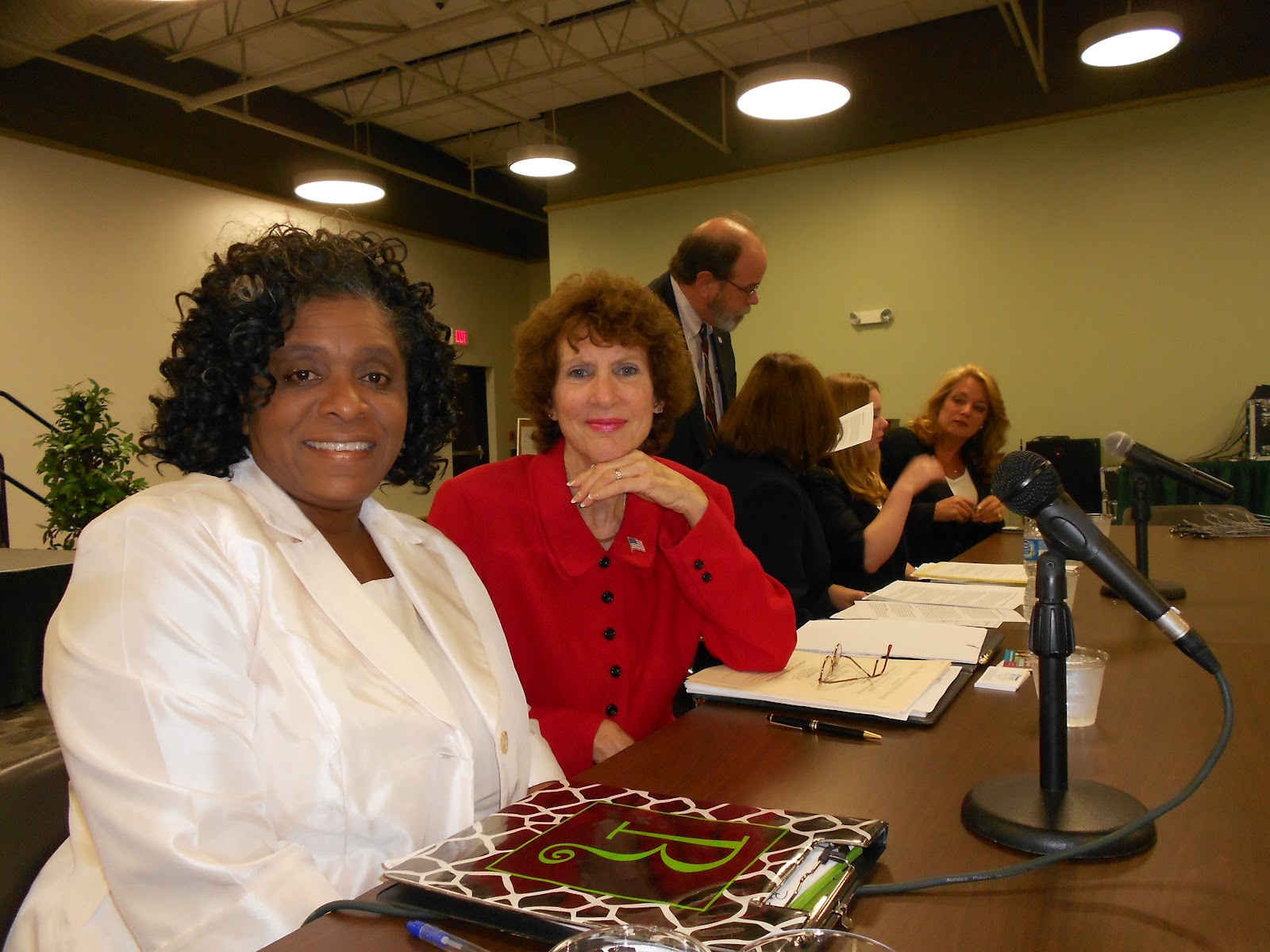
The panel consisted of women from countries throughout the Middle East and a bi-partisan representation of political leaders from Tampa Bay.  Our local leaders were

Councilwoman Leslie Waters (former Speaker Pro Temp of the Florida House of Representatives)
Mayor Kathleen Peters (candidate for Florida House of Representatives)
Former Councilwoman Rene Flowers (candidate for Pinellas County School Board)
USFSP Student Government President Courtney Parish

I was pleased that several of my students who are working on research projects about Women's Rights in the Middle East were able to attend this session and listen in on the exchange about challenges and opportunities for women in the U.S. and throughout the Middle East. Students also met key contacts in the countries they were studying, and the women leaders corresponded with them after returning to their home countries.

You can learn more about the International Council here


THE INTERNATIONAL COUNCIL OF THE TAMPA BAY REGION, INC. is the official partner of the United States Department of State for professional programs & cultural activities for global emerging leaders under the Department’s “International Visitor Leadership Program (IVLP)” in Florida's seven-county Tampa Bay Region.
Since its founding, The International Council has hosted in excess of 3,500 international visitors from more than 160 countries.


Tuesday, March 27, 2012

Global Classroom: Videoconference to Review Research Paper Proposals


Students submitted research paper proposals, outlines, and preliminary bibliographies.

These were uploaded to the dropbox folders, so that mentors in the Middle East could review and provide feedback to the students as well.

Today we skyped in class with our key contact from the Women Lawyer's Group who provided feedback and answered student questions one-on-one.

This time we used my iPad for the skype videoconference, which made it much easier to move around the classroom for individual students to have a turn asking questions.

Soon we will be able to share students' research findings.

Saturday, February 4, 2012

Global Classroom: Videoconference to Discuss Potential Research Topics


On Thursday, February 3rd we skyped with our colleague Raya Abu Gulal in Abu Dhabi to discuss potential research topics for this project.

Here are some of the topics we discussed:

(1) Egypt - Sexual harassment has been a major problem in the past years. Research laws that protect women from sexual harassment in the schools, workplace, or public.

(2) Israel –Research marriage laws or regulations. Are there civil marriage laws? Or, research domestic violence laws.

(3) Iraq – Human trafficking of women for various purposes. Research the laws and regulations that protect them.

(4) Jordan – Domestic Violence against women and the increase of honor killings. Are there any protection granted to women?

(5) Tunisia - Family law and the protection of women in the event of marriage, divorce, or parental custody disputes.

(6) United Arab Emirates – The lack of laws to protect victims of rape or the difficulties in seeking punishment for those who carry out these crimes.


The students will submit their research topic and country preference on Tuesday, February 6th.

Women Lawyers Group Middle East

My class is partnering with the Women Lawyers Group in the Middle East. We are collaborating with attorney Raya Abu Gulal and her colleagues, who will mentor my students as they work on their comparative legal research projects.

Here is more information about the Women Lawyers Group:

The Women Lawyers Group Middle East is based on the recognition of the direct need for a forum for the exchange of knowledge, experience and initiatives of women in the legal sphere as well as enhancing the professional development of women in the legal field thereby leading to the betterment of the social and economic fabric of society in the Middle East.

About us

The Group will provide social networking opportunities, hosting of functions and events relevant to the legal profession, enhancement of the work life balance of women working in the legal field, professional development opportunities, improving the status of women in the Middle East including their entitlement to equal rights.

The 3 founding members are dynamic ladies who hail from the MENA/GCC region and are professionally qualified international lawyers with long standing experience in various areas of the law as well as an active commitment to social and business issues in the Middle East and North Africa.

Mission statement

• To bring female lawyers across the Middle East and strengthen links between them;
• To undertake studies, research and conferences of Middle Eastern Female lawyers with the view to achieving equality of rights and opportunities;
• To promote the welfare, interests and development of women in the legal profession in the Middle East;
• To promote the highest standards of legal professionalism as dictated by international best practice; and
• To attract females in the Middle East to join the legal profession.

Goals
• Promote women in the legal profession;
• Expansion of the Group;
• Establish world-wide professional and social network for women lawyers;
• Raise awareness of legal matters in society;
• Development initiatives and efforts ; and
• Promote legal education female students.

Sunday, January 8, 2012

ACYPL Summit, Amman, Jordan, Day 3

The Opening Plenary Session,

The Next Decade: Arab Spring or Fall?

The presenter was Shadi Hamid, Director of Research, Brookings Doha Center in QATAR, facilitated by Jay Footlick (ACYPL Alum and Trustee).   His research interests are Islamist political parties and reform in the Middle East.  He talked about U.S. response to transformations during the Arab Spring ... and suggestions for moving forward

This was followed by a discussion with

Perceptions of a Writer, New Yorker Middle East Correspondent, Peter Hessler

in conversation with Linda Rotunno, the CEO of ACYPL.  He shared his observations and lessons learned from the 2 weeks he spent in the mosque in Tahrir Square.  You can read more here

http://www.newyorker.com/reporting/2011/12/19/111219fa_fact_hessler

I also include a few photos from around Amman.


Saturday, January 7, 2012

ACYPL Summit, Amman, Jordan: "Revolution 2.0: Promoting Political Change through Social Media"

In the afternoon, I participated in a breakout session:

"Revolution 2.0: Promoting Political Change through Social Media"

The facilitator was Co-Founder of the Trustees of the Revolution in Egypt. 

What a privilege it was to have the opportunity to meet with one of the leaders of the revolution. To hear and learn first-hand first-hand about the organization and implementation of the revolution.

One of the things he pointed out was that it would be a myth to call it the "facebook revolution," because 40-50% of Egyptians are living in poverty and do not have PCs or the internet at home. However, he did describe the important role of technology and social media.

Friday, January 6, 2012

ACYPL Summit, Amman, Jordan: Breakout Session: Empowerment of Women in the Region

In the afternoon of Day Two of the Summit, I participated in a Breakout Session

"Breaking the Silence: The Empowerment of Women in the Region"

the facilitators were a member of the Tel-Aviv City Council in Israel and a corporate attorney who is also the Co-Founder of a Women's Lawyer Network based in UAE.

One of the many different topics we discussed was sexual harassment -- and responses to it in the US and in countries throughout the Middle East.
Tamar conducted a survey in Tel-Aviv and found that 90% of the women responded that they had been sexually harassed in broad daylight, in public, more than once in their lives. She wrote an article about this study, which I would love to read.

It was at this panel that I met Raya and how the Women's Rights in the Middle East project got off the ground.

Pictured here -- the equipment used for simultaneous translation during our discussion and the view of Amman from the conference room window.